Sorokoust and Panikhida: What They Are and When to Order
Svichka.org · Updated 2026-10-07 · 8 min read
Sorokoust and panikhida sound alike and get mixed up constantly. They are different things: one service held on one day, and forty days of prayer for a name. Below is the order that usually helps: what each one is, when people order them, what to read on the 9th and 40th day, and what it costs.
In this article: Prayer on the 9th day · Prayer on the 40th day · Prayer for the newly departed · The akathist for the departed
A prayer you can see
Let your prayer become a candle in a church
We light a candle with your prayer and send you the photo on Telegram. It is free and takes a minute.
🕯 Order a candle free✦ Over 200 candles already lit, each photo comes to you on Telegram
What a Sorokoust Is, in Plain Words
A sorokoust is a request that someone's name be commemorated at the Divine Liturgy for forty days in a row. At each service the priest names the person, either for health or for repose. You arrange it at a church: write the names on a slip, leave a donation. It is not a separate product or a ritual, it is a share in the prayer of the Church. When you ask for a sorokoust, you are asking the whole community to carry your loved one with them for forty days. It is simple, and it is deep. The priest does not perform a private ceremony for you. He remembers your person before God at the altar, together with all the others whose names have been given.
Why Forty Days
Forty is the biblical number of completeness: forty days of fasting in the wilderness, forty days with the disciples after the Resurrection, forty years of wandering before the promised land. In Orthodox teaching the first forty days after death are a distinct path for the soul. That is why forty liturgies in a row read as a complete commemoration rather than forty repetitions. The number is not a magic formula. It is the shape the Church has always given to a full measure of prayer. When you ask for forty days, you are asking for a complete cycle, a whole season of remembrance. The fortieth day itself carries its own weight, but the forty days together are the full offering.
Sorokoust for Health: When People Order It
For the living, people order it during illness, before surgery, in hard circumstances, for soldiers, for children, for those travelling. Often it is done on a birthday or a name day. Prayer does not replace a doctor and does not work as a charm. It goes alongside treatment and gives a person something to stand on. You are not buying a result. You are asking the Church to hold your person before God while they go through something difficult. The priest names them at the Liturgy, and that naming is a kind of support that does not depend on the outcome. It is a way of saying: you are not alone in this.
Sorokoust for the Departed: Day 9, Day 40, the Anniversary
For the departed, people order it on the day of death, on the ninth and fortieth day, on the anniversary, and simply for a longer term. The Church prays for the forgiveness of sins and the repose of the soul. You can remember someone on any day. The calendar only shows when the whole parish prays together. The ninth day and the fortieth day are marked because the Church has always marked them, but your own prayer is not limited to those dates. If you wake up thinking of your mother on a random Tuesday, you can light a candle and pray. The sorokoust is a way of placing that personal grief inside the larger prayer of the Church.
What a Panikhida Is, and How It Differs from a Sorokoust
A panikhida is a memorial service a priest serves at the kanun, the memorial table with a cross. It lasts about twenty minutes, ends with the singing of Eternal Memory, and kutia is blessed. It is served on the third, ninth and fortieth day, on the anniversary, and on parental Saturdays. The difference is simple: a panikhida is one service on one day, a sorokoust is forty days of commemoration at the Liturgy. People sometimes confuse the two. A panikhida is a gathering, a moment you can attend, with the priest and the parish standing together. A sorokoust is a longer, quieter thing. It does not require you to be present each day. It is the Church carrying the name day after day.
The Akathist for the Departed, Read at Home
An akathist is a prayer text built from kontakia and ikoi. It can be read at home, without a priest. People light a candle first, read the opening prayers, and finish with a prayer for the departed. It is most often read for the forty days after death, on memorial days, and on the anniversary. Many read it daily for a year. You do not need a special blessing to read it at home. You do not need a church building. You need a corner with icons, a candle, and the words. The rhythm of the akathist is steady and repetitive, and many people find that this steadiness helps them when grief makes it hard to find their own words.
Prayer on the 9th Day
Orthodox teaching holds that until the ninth day the soul is shown the heavenly dwellings, and after that the trials begin. On this day a panikhida is served, families pray at home, and a candle is lit for repose. Relatives gather at the table, but the point of the day is the prayer, not the food. It is easy to let the meal become the center, especially when everyone is tired and sad. But the ninth day is first of all a day of prayer. The panikhida, the home prayers, the candle, these are the heart of it. The table is there to bring people together, not to replace what the day is for. If you can only do one thing, pray.
Prayer on the 40th Day
The fortieth day is the most important day of remembrance: this is when, according to the Church, the soul's place until the Last Judgment is determined. On that day a panikhida is served, a sorokoust is often ordered, and alms are given for the person. Good done in their name counts toward them too. This is a day when many families feel the weight most strongly. The Church does not ask you to be certain about what happens after death. It asks you to pray, to give, and to trust. The fortieth day is not a deadline for your grief. It is a marker, a day when the whole community gathers around the name and lifts it up together.
Prayer for the Newly Departed
The newly departed are those who have died within the last forty days. This is the window when the prayer of loved ones carries the most weight. It is why a sorokoust is ordered for these days, and why families read the akathist and the prayer for the newly departed at home. The Church speaks of this time with special tenderness. The person has just crossed over, and the prayers of those still here are offered with a particular urgency. If you have lost someone recently, you do not need to wait for a special date. You can begin today. You can write the name, order the sorokoust, and read the prayers at home. The forty days will pass, and the Church will be with you through them.
Prayer for the Departed, at Church and at Home
At home, people pray in the morning or evening before the icons and light a candle or a lamp. In church, the candle for the departed is placed on the kanun. You can pray whenever the person comes to mind, not only on the days marked in the calendar. This is one of the quietest and most personal parts of Orthodox life. There is no schedule you have to keep. If you are washing dishes and suddenly remember your grandfather, you can say a short prayer right there. The home and the church are not two separate worlds. The candle on the kanun and the candle on your table are both signs of the same prayer, offered in different places, by the same Church.
What a Sorokoust and a Panikhida Cost
It depends on the parish. Most often you leave a donation, and some churches ask only what you can give. Where there is a fixed rate it tends to run from a few dollars up to roughly twenty five, and a year-long commemoration costs more than forty days. We do not charge for a candle: it is free, and a donation stays entirely up to you. Money is never the point. If you have nothing to give, you can still ask for prayer. The donation is a way of sharing in the work of the church, not a fee for a service. No priest will turn away a name because the slip came with no money. The prayer is what matters, and it is offered freely.
How to Arrange a Sorokoust or Panikhida
The simplest way is to go to a church, write the names in the genitive case as Orthodox practice requires, mark whether it is for health or for repose, and leave a donation. A slip usually holds up to ten or fifteen names, and the living and the departed are best kept on separate slips. Some churches and monasteries also take requests online: you send the names and the intention, and they are added to the service. If you are not sure how to write a name, ask the woman behind the candle box. She will help you. The genitive case can feel strange if you are new to it, but it is simply the form the Church uses. You do not need to know all the rules before you go.
What We Do, and What We Do Not Do
We light a candle in a church for your name and intention, pray along with you, and send you a photo on Telegram or WhatsApp. If the request arrives before 6 pm Kyiv time, the candle burns the same day. We do not have a priest, so we do not serve a full panikhida or a sorokoust: a priest at a parish does that. Our part is the visible candle and the prayer beside you. As of October 2026 we have lit more than two hundred candles. We are not a replacement for your parish. We are a small thing you can ask for when you are far from home, or when you simply need to know that someone is praying with you today.
📷 Photos from the church: what your candle looks like
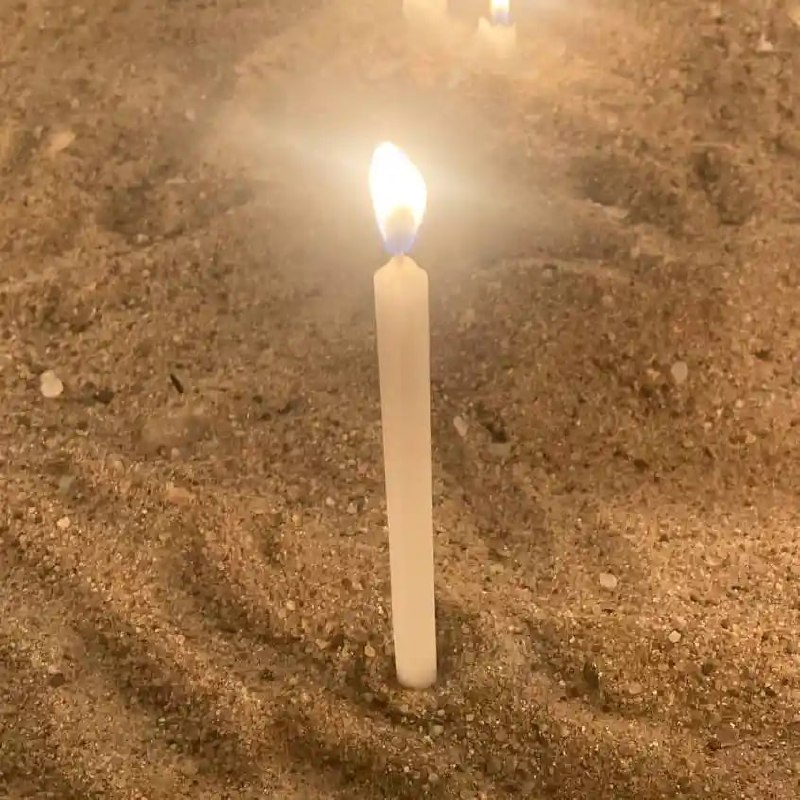
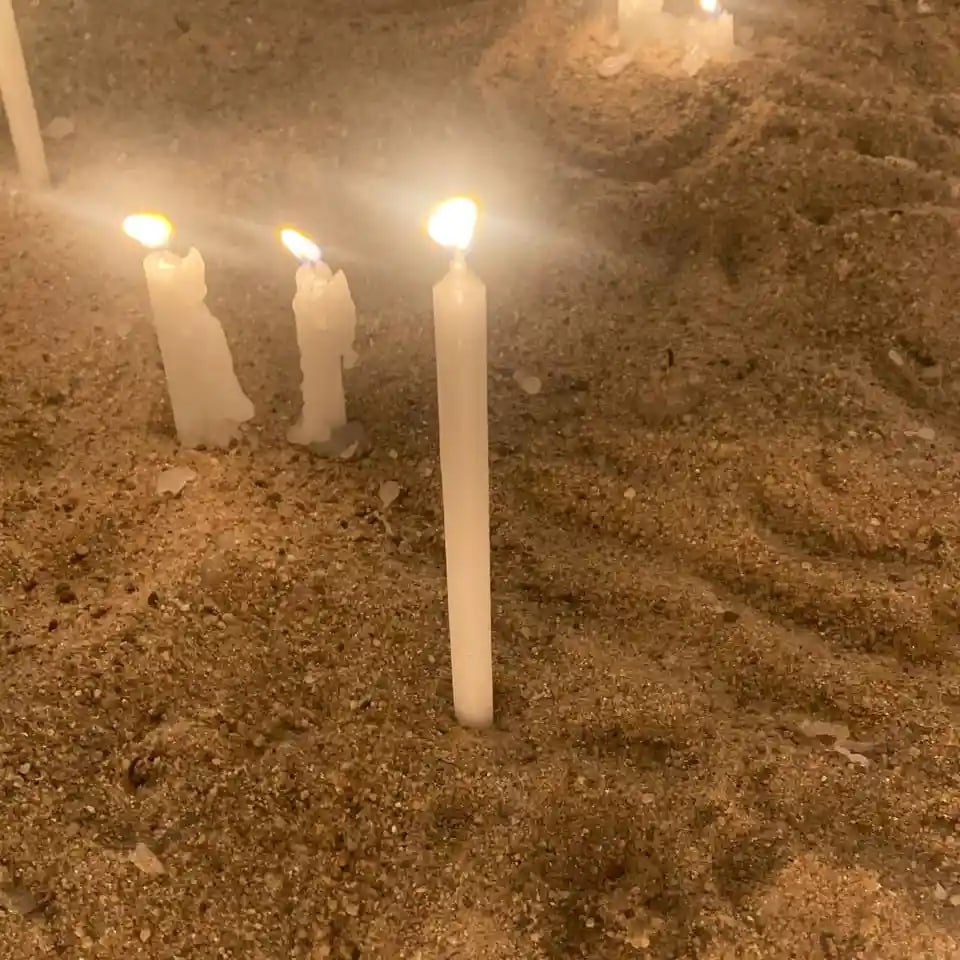
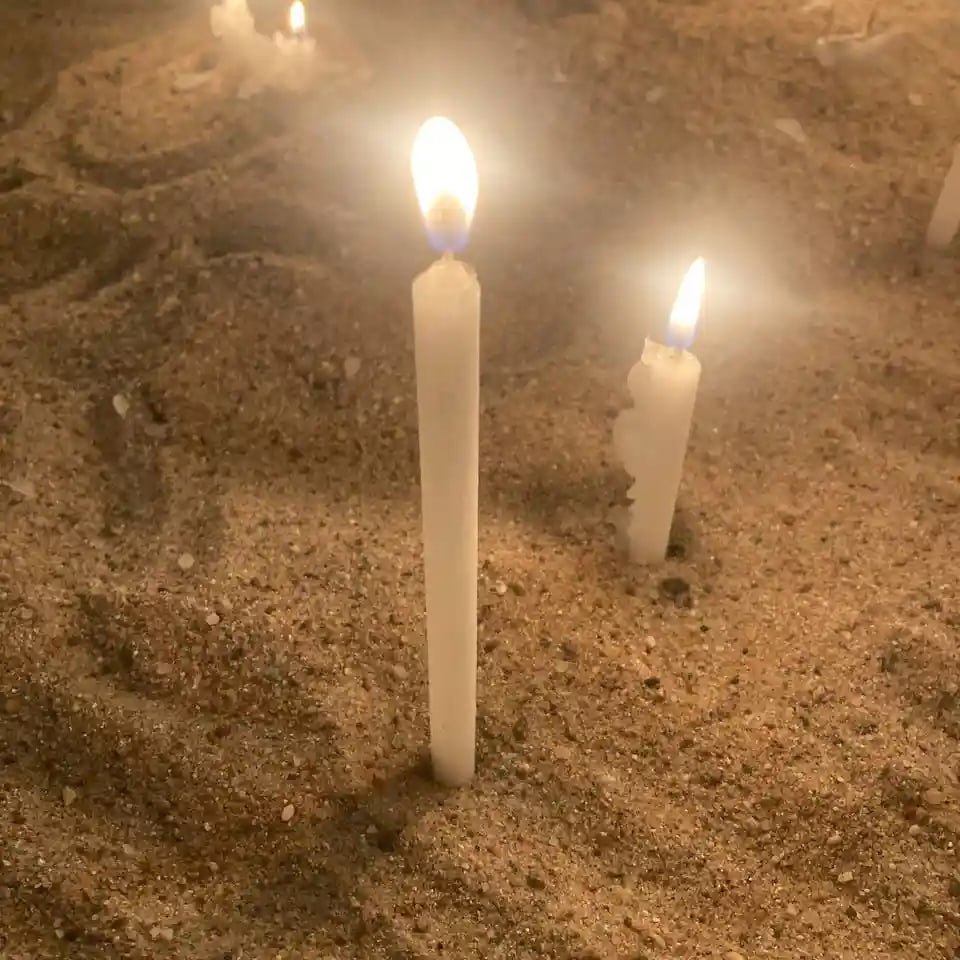
Candles on the kanun: this is the photo you receive
We do not send stock images. Every photo is a candle we actually placed on the kanun in the church, taken the same day. That is why you see the date and time in the message.
If your request arrives before 6 pm Kyiv time, the candle burns the same day and the photo comes that evening. Later requests are lit the next morning.
Common questions
How is a sorokoust different from a panikhida?
A panikhida is a service a priest serves on one specific day. A sorokoust is the commemoration of a name at the Liturgy for forty days in a row. One service on one day, and forty days of prayer, are different things.
When do people order a sorokoust?
For health: during illness, before surgery, for soldiers, for children. For the departed: on the day of death, on the ninth and fortieth day, on the anniversary, and any time you want the commemoration to continue.
Can a sorokoust be ordered for someone who was not baptised?
At the Liturgy the Church prays for the baptised. For someone who was not baptised, people pray at home and give alms on their behalf.
How many names can go on one slip?
Usually up to ten or fifteen. It is better to keep the living and the departed on separate slips so the intention is not mixed up.
What should I do on the 40th day?
Order a panikhida at a church, light a candle for repose, pray at home, and gather family at the table. Giving alms for the person is a good thing to do.
Can I order a sorokoust through your site?
No. A sorokoust is arranged at a church with a priest, it is his service. We light a candle with your prayer and send you a photo on Telegram or WhatsApp.
When will I get the photo of the candle?
If the request arrives before 6 pm Kyiv time, we light the candle the same day and send the photo that evening. If it comes later, the candle burns the next day.
Is it free?
Yes. The candle is free and there is nothing to sign up for. A donation is possible, but it is entirely up to you.
What people tell us
"I ordered a candle for my mother in the same evening a photo came from the church. Thank you for what you do."
— Olga, Kyiv
"We live abroad, and a candle for my grandmother was lit in our home church. The photo was very moving."
— Natalia, Warsaw
"I ask for a candle for our soldiers every week. Seeing it burning is hope."
— Iryna, Lviv
📷 Your candle photo arrives on Telegram, so you see it with your own eyes.
Would you like us to light a candle for your prayer?
It is free. Leave your name and we will light a candle in a church and send you the photo.
Candle with your prayer · Photo on Telegram · free
📢 Subscribe to our channelPrayers for health · Prayers for the departed · Candle for the departed · The Panikhida, explained · 40 days after death · Morning prayer · The Lord's Prayer · All prayers