40 Days After Death: Prayer on the 40th Day
Svichka.org · Updated 2026-10-07 · 7 min read
The fortieth day is the one Orthodox families treat as the main day of remembrance. This page goes through the teaching behind it, what happens to the soul on days three, nine and forty, what the family actually does on the day, what to read, and the prayer for the fortieth day itself. At the end there is a simple way to have a candle lit in a church if you cannot get there.
In this article: Prayer on the 40th day · What happens to the soul · What the family does · Order a candle online
A prayer you can see
Let your prayer become a candle in a church
We light a memorial candle with your prayer for the departed and send you the photo on Telegram. It is free and takes a minute.
🕯 Order a memorial candle free✦ Over 200 candles already lit, each photo comes to you on Telegram
Why the Fortieth Day Matters Most
Orthodox commemoration keeps three fixed days after a death: the third, the ninth, and the fortieth. The fortieth is the one families treat as the main memorial day. In Orthodox teaching the soul is not finally settled until the fortieth day, so the prayers of the living still matter. The number forty carries the idea of a finished period, as in the forty days of fasting in the wilderness and the forty days between the Resurrection and the Ascension. The day is not a deadline to be afraid of. It is the day the whole parish can pray together with the family.
What Happens to the Soul in the First Three Days
Tradition holds that the soul does not leave at once. For the first two days it stays close to the places where it lived, and on the third day it is brought before God. The third day is kept as the first commemoration. Relatives ask a priest for a funeral liturgy and a panikhida, and give alms in the name of the person. The body is buried or cremated in these days, while the soul is remembered in church. The third day does not decide anything. It opens the church prayer that runs on to the fortieth.
From the Third Day to the Ninth Day
Between the third and the ninth day, the tradition says, the soul is shown the dwellings of the righteous, the places prepared for those who loved God. The ninth day is the second fixed commemoration. Families order a panikhida, light a candle for repose on the kanun, and read the Psalter at home. A memorial meal is often held on the ninth day too, smaller than the one on the fortieth. Priests usually warn against turning either day into a banquet. The prayer is the reason everyone is gathered, the table is only the table.
From the Ninth Day to the Fortieth Day
From the ninth day to the fortieth, tradition says, the soul is shown the torments of hell and the fate of those who turned away from God. This is the middle of the period, the hardest stretch, and it is why prayer is asked for continuously and not only on the three fixed days. Many families order a sorokoust so that the name is read at the Liturgy for forty days in a row. At home people read the Psalter, the akathist for the departed, or simply the short prayer for the departed each morning and evening.
The Fortieth Day: The Soul Before God
On the fortieth day, Orthodox teaching says, the soul appears before God and receives a preliminary judgement, the place it will keep until the Last Judgement. Nothing is closed at that moment, the general judgement is still ahead, and that is why the Church goes on praying for the departed for years afterwards. The forty days are also the mourning period for the family, when the first shock has passed and the loss becomes real. The Church holds the two together: the soul before God, and the family at the kanun with a candle.
What the Family Does on the Fortieth Day
The usual order of the day is a liturgy and a panikhida at church, a candle for repose on the kanun, a memorial meal at home, and alms given in the name of the departed. Many families also go to the grave. Clothes and belongings of the departed are often given away on this day. What is read at home is up to the family: the Psalter, the akathist for the departed, or the prayer for the fortieth day. There is no single script that has to be followed. What is required is the prayer and the good done in the name of the departed.
The Panikhida on the Fortieth Day
A panikhida is a short memorial service a priest serves at the kanun, the memorial table with the crucifix. It lasts about twenty minutes and ends with Eternal Memory. It is served on the fortieth day, and it can also be served at the request of the family on other days. The family brings a list of names in the genitive case, writes them on a slip, and marks that they are for repose. At the end the family stand at the kanun and place their own candles there.
A Candle for the Fortieth Day
A candle for repose is placed on the kanun, the table for the departed, not on the stand for the living. It is not a payment and it does not replace a service. It is a visible sign of a prayer that someone is saying right now. People who are far from home often cannot stand at the kanun themselves. We light the candle in a church for the name and the intention you send, and the photo comes back to you the same day.
Alms and Good Deeds for the Departed
Orthodox tradition treats alms as prayer acted out. Food, clothes or money given to someone in need in the name of the departed. A debt forgiven. A donation to the church. Help given to a person the departed would have helped. What counts is not the size but that the good is done deliberately and named. On the fortieth day it is common to give away the clothes of the departed, or to give a sum to the poor instead of setting a larger table.
The Memorial Meal: What to Serve and What to Keep Simple
The memorial meal is a family custom rather than a church rule. On the fortieth day relatives gather at home after the service. The traditional dishes are kolivo or kutia, made from boiled wheat with honey and raisins, then pancakes and a simple soup. In Ukraine, and among Ukrainian families abroad, there is often more on the table, but the old advice is to keep it plain. Alcohol is best left out, or kept to a minimum, so the day stays about prayer. Some families set an empty place for the departed, and let the eldest say the prayer before the meal.
What to Read on the Fortieth Day
Three texts are read most often on the fortieth day: the Psalter, the akathist for the departed, and the short prayer for the fortieth day. The Psalter can be read in full or in kathismata, alone or shared between members of the family. Someone who died within the last forty days is called newly departed, and the prayer for the newly departed is read as well. No priest is needed for reading at home. What matters is that the reading is steady, not that it is long.
Prayer on the Fortieth Day
This is the prayer said on the fortieth day itself. The name is the baptized name of the person being remembered. It can be read at the grave, at home in front of the icons, or after the panikhida, and it is short enough to say every day of the forty day period as well. Read it slowly and put the name in where it says name.
Prayers You Can Read at Home
The second prayer is a general prayer for a departed person and can be used on any day, not only the fortieth. Some families read it each morning and evening through the forty days. Light a candle or a lamp in front of an icon, stand, and say the prayer in your own words if the words are hard to hold on to. Orthodox practice allows prayer for anyone, including people who were not baptized, though those prayers stay at home rather than at the Liturgy.
How to Order a Candle or a Memorial Prayer Online
You send the name of the departed as it was given at baptism, the intention, which is repose, and your own name and email. If the request arrives before 6 pm Kyiv time we light the candle on the kanun the same day and send you the photo that evening. Later requests are lit the next morning. The candle is free, there is nothing to sign up for, and a donation is optional. We are not a parish and we do not replace a priest: a panikhida or a sorokoust has to be arranged at a church. Our part is the candle, the prayer said beside you, and the photo you can keep.
What We Do, and What We Do Not Do
We light a candle in a church for the name and the intention you send, we pray along with you, and we send the photo on Telegram or by email. Requests that arrive before 6 pm Kyiv time are lit the same day and the photo comes that evening. We do not have a priest, so we do not serve a panikhida or a sorokoust. We do not ask for money for the candle. As of October 2026 we have lit more than two hundred candles, and every photo is taken at the kanun, never downloaded from the internet.
📷 Photos from the church: what your candle looks like
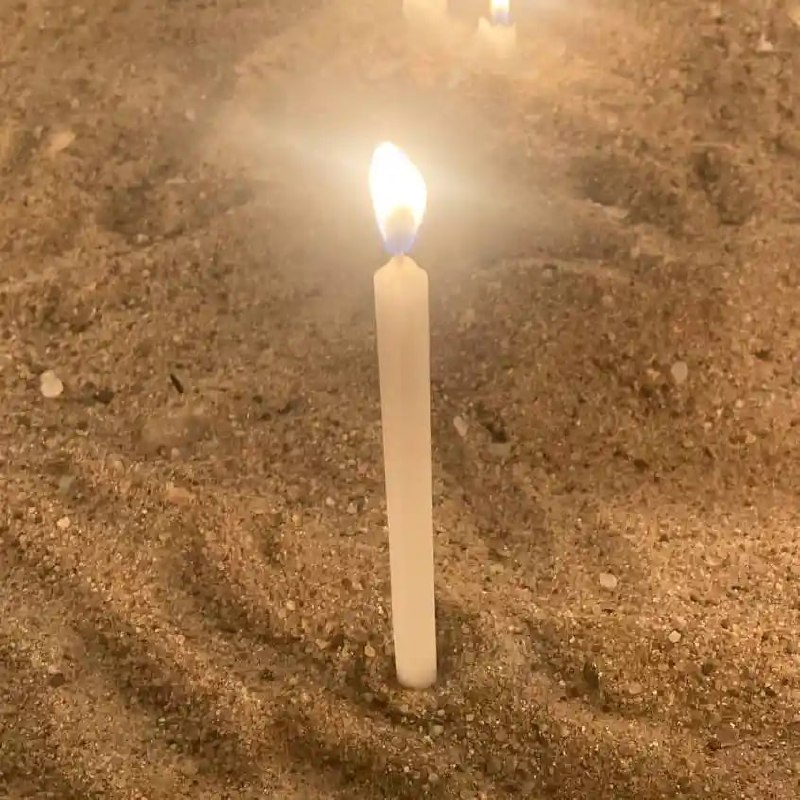
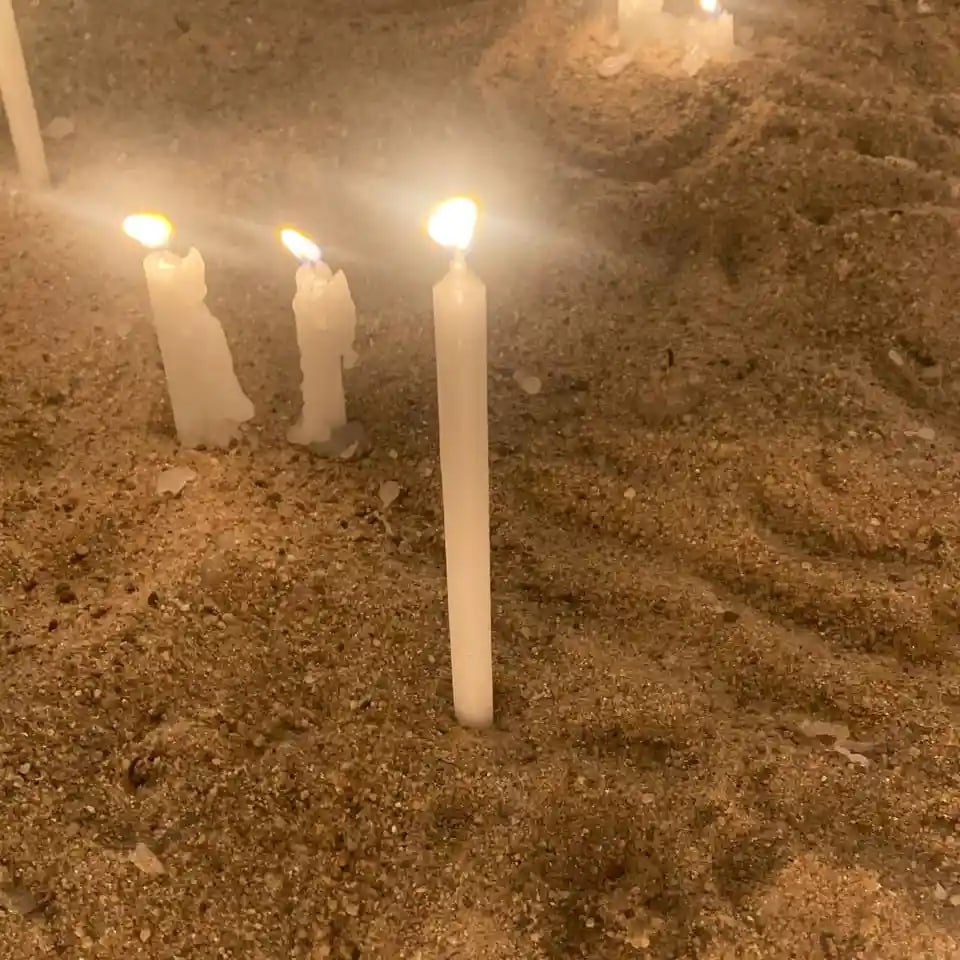
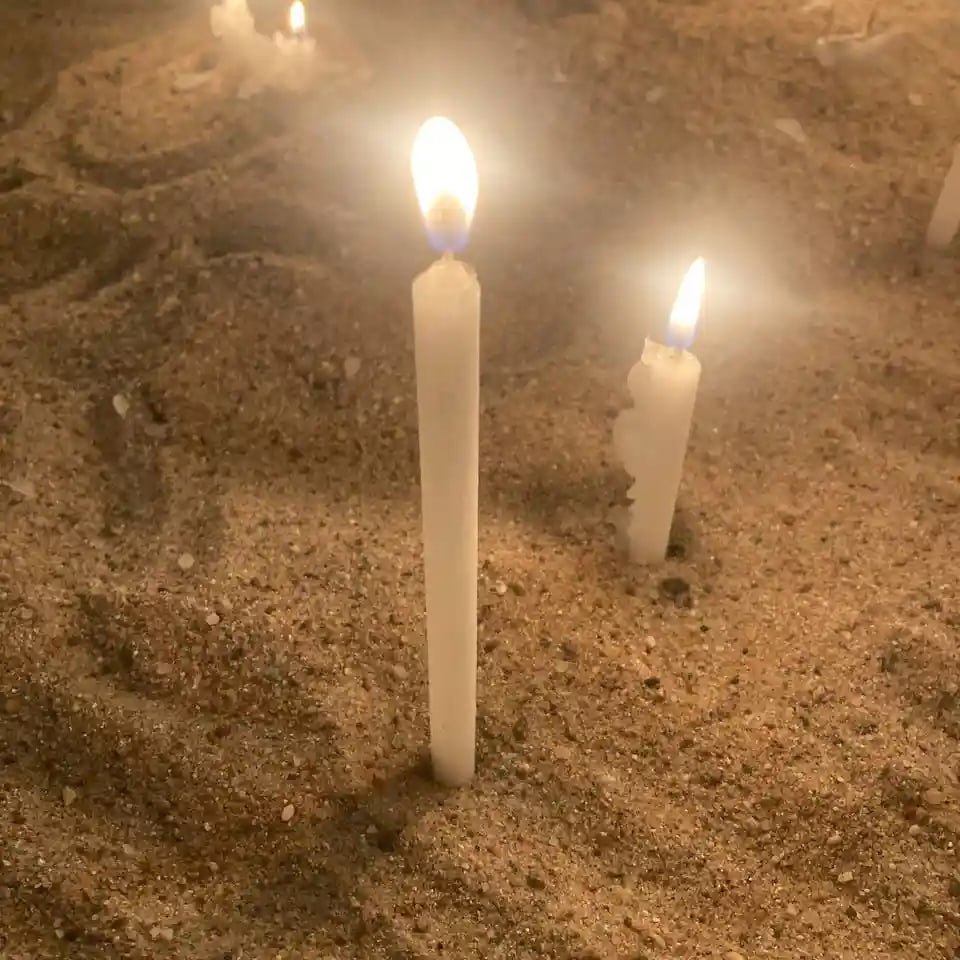
Candles on the kanun: this is the photo you receive
We do not send stock images. Every photo is a candle we actually placed on the kanun in the church, taken the same day. That is why you see the date and time in the message.
If your request arrives before 6 pm Kyiv time, the candle burns the same day and the photo comes that evening. Later requests are lit the next morning.
Common questions
Why is the fortieth day after death the most important one?
Orthodox teaching holds that on the fortieth day the soul appears before God for a preliminary judgement, and keeps that place until the Last Judgement. The prayer of family and friends on that day carries the most weight, which is why the whole day is built around it.
What happens to the soul on the third, ninth and fortieth day?
Tradition says the soul stays near the places where it lived for the first days, is shown the dwellings of the righteous from the third day, the torments of hell from the ninth, and appears before God on the fortieth. The three days are the three fixed days of commemoration.
What should the family do on the fortieth day?
Order a panikhida, place a candle for repose on the kanun, pray at home, gather the family at a simple memorial meal, and give alms in the name of the departed. Going to the grave on the same day is also common.
Can I pray at home if I cannot get to a church on the fortieth day?
Yes. Read the Psalter, the akathist for the departed, or the prayer for the fortieth day at home, and light a candle or a lamp in front of an icon. A priest is not needed for prayer read at home.
Which prayer should be read on the fortieth day?
The prayer for the fortieth day, printed on this page, is the one said on that day. It is short enough to read every day of the forty day period as well, at home, at the grave, or after the panikhida.
What is usually served at a fortieth day memorial meal?
Kolivo or kutia made from boiled wheat with honey and raisins, pancakes, and a simple soup. The old advice is to keep the table plain, and to leave alcohol out so the day stays about prayer.
Can a candle be lit if the fortieth day has already passed?
Yes. A candle for repose can be lit on any day. The anniversary of the death and the birthday of the departed are the two days families ask for a candle most often after the fortieth.
How do I order a candle or a memorial prayer online?
Send the baptized name, the intention, and your own name and email in the form on this page. If the request arrives before 6 pm Kyiv time the candle burns the same day and the photo is sent that evening. The candle is free.
What families tell us
"I ordered a candle for my mother and the photo came from the church the same evening. Thank you for what you do."
— Olga, Kyiv
"We live abroad, and a candle for my grandmother was lit in our home church. The photo was very moving."
— Natalia, Warsaw
"I ask for a candle for our soldiers every week. Seeing it burning is hope."
— Iryna, Lviv
📷 Your candle photo arrives on Telegram, so you see it with your own eyes.
Would you like us to light a candle for your prayer?
It is free. Leave the name and we will light a candle in a church and send you the photo.
Candle with your prayer · Photo on Telegram · free
📢 Subscribe to our channelThe sorokoust, explained · What a panikhida is · A candle for the departed · Prayer on the 9th day · For the newly departed · All prayers · The Lord's Prayer · Morning prayer