Prayers for the Departed
Svichka.org · Updated 2026-10-07 · 6 min read
A prayer for the departed is what we can still do for someone after they are gone. This page gathers the texts, explains when and how Orthodox Christians pray at home and in church, and what to do in the first forty days. Everything in one place, without extra words.
In this article: The prayer text · Day 3, 9, 40 · Praying at home · In church: kanun and note
A prayer you can see
Let your prayer become a candle in a church
We light a candle with your prayer and send you the photo on Telegram. It is free and takes a minute.
🕯 Order a candle for the departed✦ Over 200 candles already lit, each photo comes to you on Telegram
What a prayer for the departed is, and why it matters
A prayer for the departed asks God to forgive the sins of a person who has died and to give rest to their soul. The Church teaches that love does not end with death, so the living can pray for the dead. This is not magic and not a way to bargain for a miracle. It is care, a continuation of the relationship, and the shared prayer of the Church. You can pray at home, in church, or silently at any moment of the day. When someone you love has died, prayer becomes a simple way to stay close to them, to place them before God, and to carry your grief not alone but together with the whole Church.
A prayer for the departed: the text
This is the short text most people read when they remember someone who has died. Say the name as the person was named at baptism. Read it slowly, paying attention to each word, aloud or silently. If you are praying for several people, name each one separately. There is no need to rush. The words are few, and they are meant to be said with attention and love. You can repeat them as often as you wish, in the morning or at night, when you wake or when you cannot sleep. The prayer is simple, and that is its strength.
When Orthodox Christians pray: day 3, 9, 40 and the anniversary
The first forty days after death are treated as a special time for the soul, so prayer is most intense then. The third day is tied to the burial and the first prayer, the ninth and the fortieth are the days when a panikhida is served and a sorokoust is ordered. After that the anniversary, the birthday of the person and the memorial Saturdays matter, when the whole Church prays for all the departed together. The simple rule still holds: pray when you remember the person, not only when the calendar says so. If you forget a date, do not be afraid. God hears you whenever you turn to Him with love.
Who the Church prays for, and who it does not
At the liturgy the Church commemorates baptised Orthodox Christians. For the unbaptised, for people of other faiths and for those who took their own life, there is no church prayer. This is not a judgement or a punishment, but a line the Church does not cross. For such people families pray at home, in their own words, and give alms on their behalf. A priest will say the same thing plainly when you bring a note, and asking about it is normal practice, not something to be ashamed of. You can always speak with a priest about your situation. He will not turn you away, and he will help you find the way to pray that is possible for you.
What to do in church: the kanun, a note, a panikhida
In church a candle for the departed is placed on the kanun, the table with the crucifix. Cross yourself, light your candle from another one, place it, and say the short prayer quietly. Besides a candle you can hand in a note for the proskomedia, or order a panikhida or a sorokoust. A note is written with names in the genitive case, the living and the dead on separate sheets, usually up to ten or fifteen names. A panikhida is one service on one day, a sorokoust is forty days of commemoration, and both are ordered from a priest. If you are not sure how to write a note, ask the woman behind the candle box or the priest. They will explain it simply, and no one will think less of you for asking.
Praying at home
At home people pray in front of the icons with a candle or lamp lit. Choose a time when nobody disturbs you, morning or evening is best. Read the prayer for the departed, then add a few words of your own. Recall what this person was like, ask forgiveness if there was anything unfinished between you. Nothing complicated is required, just a candle, an icon and a few quiet minutes. Home prayer does not replace church prayer, but it happens every day, and that is its strength. When you cannot get to church, when the weather is bad or you are ill, the candle at home still burns, and your prayer still rises.
The akathist and the Psalter for the departed
The akathist for the departed is read at home, without a priest. It is a text of kontakia and ikoi that opens with the usual prayers and ends with a prayer for the dead. Many people read it for forty days in a row, or one section a day for a year. The Psalter is read at home in the same way, one kathisma a day with the name of the person added. Both are calm, steady prayers, and they suit people who find it hard to pray in their own words. If you have never read them before, you can begin with just one section and see how it goes. There is no pressure and no deadline. The point is to keep praying, quietly and patiently, for as long as you need.
The newly departed
Someone is called newly departed during the first forty days after death. During that time people hand in notes for the repose of the newly departed and read the prayer that uses this word at home. These are also the days when a sorokoust is most often ordered. If the death is very recent, start with the short text above and come back to the longer prayer for the departed when you can concentrate. Grief can make it hard to read or to focus, and that is normal. Do what you can. Even a few words said with a heavy heart are heard. The Church does not expect you to be strong right now. She only asks you to keep turning to God, however small that turning may be.
The memorial meal and alms
A memorial meal is the custom of gathering the family around a table, remembering the person well, and sharing food. What matters that day is the prayer, not the dishes. Instead of flowers and expensive wreaths many families do something good in the name of the person who died. They help someone in need, pass on food, or give to the church. In the first forty days those acts are usually joined to daily prayer. The Church does not forbid remembering someone at a table with a glass raised, but asks families not to turn the day into a party. The meal is a time to speak of the person with warmth, to share memories, and to let the day be quiet and kind rather than loud and distracting.
What we do and what we do not do
We light a candle in church for your name and your intention, we pray alongside you, and we send you the photo on Telegram or WhatsApp. If your request arrives before 6 pm Kyiv time, the candle burns the same day and the photo comes that evening. The candle is free, and a donation is entirely optional. We have no priest, so we do not serve a panikhida, a sorokoust or a proskomedia. A priest does that in his parish. Our part is the visible candle and the prayer next to yours. As of October 2026 we have lit more than two hundred candles. If you are far from home, or cannot get to a church today, this is one small way to be remembered together with the whole Church.
📷 Photos from the church: what your candle looks like
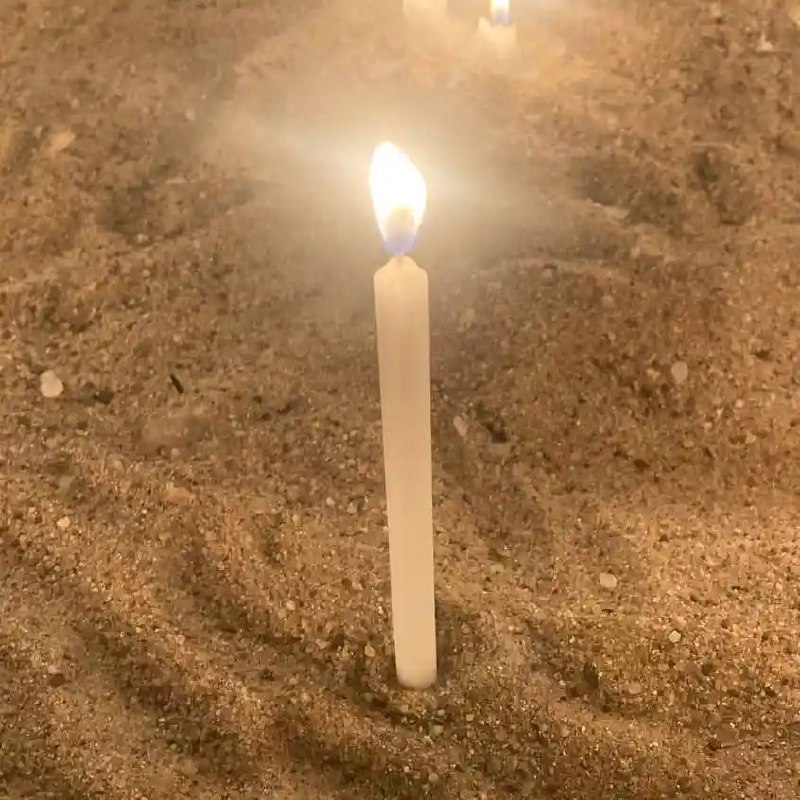
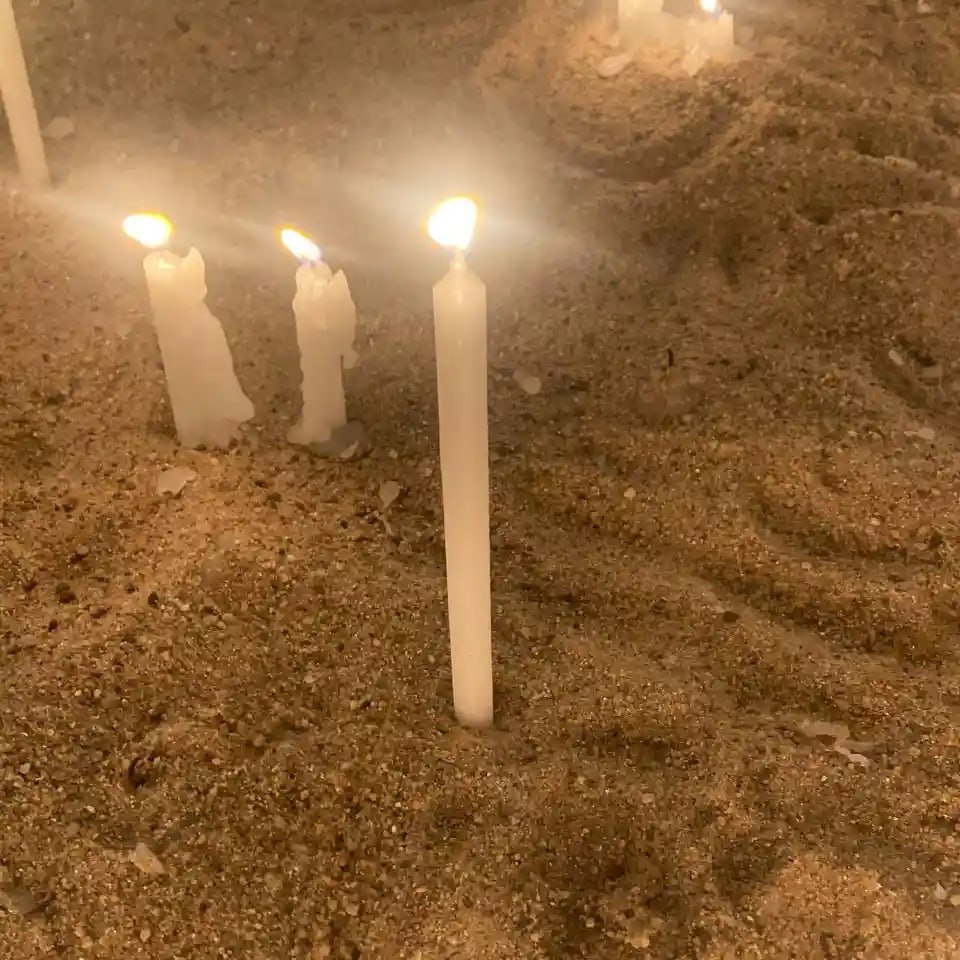
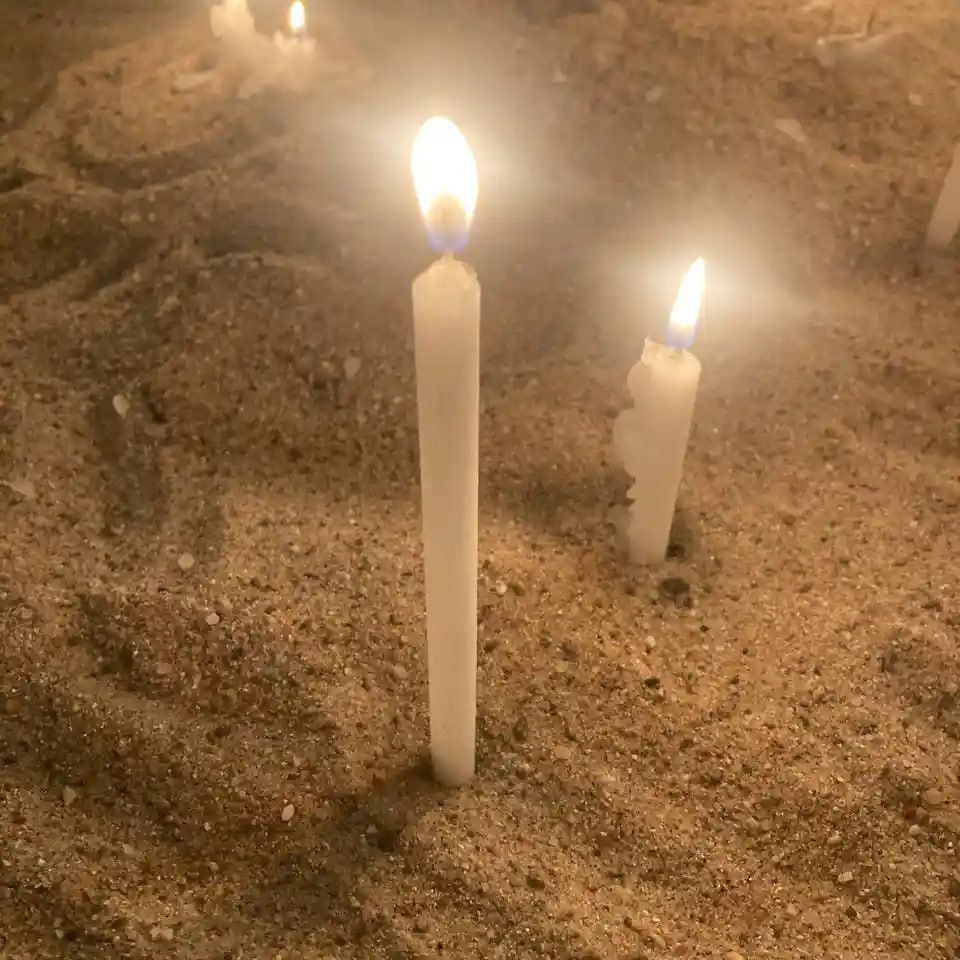
Candles on the kanun: this is the photo you receive
We do not send stock images. Every photo is a candle we actually placed on the kanun in the church, taken the same day. That is why you see the date and time in the message.
If your request arrives before 6 pm Kyiv time, the candle burns the same day and the photo comes that evening. Later requests are lit the next morning.
Common questions
Which prayer should I read for the departed every day?
The short text on this page is enough: "O Lord, give rest to the soul of Thy servant (name)". Read the longer version when you have time and quiet.
When should I pray for someone who has died?
On the third, ninth and fortieth day, on the anniversary, on the memorial Saturdays, and every day you happen to remember them. The Church does not limit prayer to a calendar.
Can I pray for someone who was not baptised?
At home you can pray in your own words and give alms on their behalf. At the liturgy the Church commemorates baptised Christians, so a church note for an unbaptised person will not be accepted.
Can I pray for someone who took their own life?
Prayer at home and alms are possible. Church commemoration and a sorokoust are not, and it is worth talking to a priest in your parish about how to hold this.
What should I do in church for the departed?
Light a candle on the kanun, the table with the crucifix. You can also hand in a note for the proskomedia, or order a panikhida or a sorokoust from a priest.
Can I order a sorokoust through your site?
No. A sorokoust and a panikhida are ordered from a priest in a church, since they are his services. We light a candle for your prayer and send the photo on Telegram.
How long should I keep praying after the 40th day?
As long as you wish. Many people read the akathist or one kathisma of the Psalter a day for a year, and then remember the person on the anniversary and memorial days.
Do I have to pray out loud?
No. A whisper or silence is fine. What matters is attention, not volume: read slowly and stay with the words.
What people tell us
"I ordered a candle for my mother and a photo came from the church the same evening. Thank you for what you do."
— Olga, Kyiv
"We live abroad, and a candle for my grandmother was lit in our home church. The photo was very moving."
— Natalia, Warsaw
"I ask for a candle for our soldiers every week. Seeing it burning is hope."
— Iryna, Lviv
📷 Your candle photo arrives on Telegram, so you see it with your own eyes.
Would you like us to light a candle for the departed?
It is free. Leave your name and we will light a candle in a church and send you the photo.
Candle with your prayer · Photo on Telegram · free
📢 Subscribe to our channelSorokoust and panikhida · Candle for the departed · The panikhida, explained · 40 days after death · Prayer for the newly departed · The Lord's Prayer · All prayers